 TR
TR  EN
EN  DE
DE 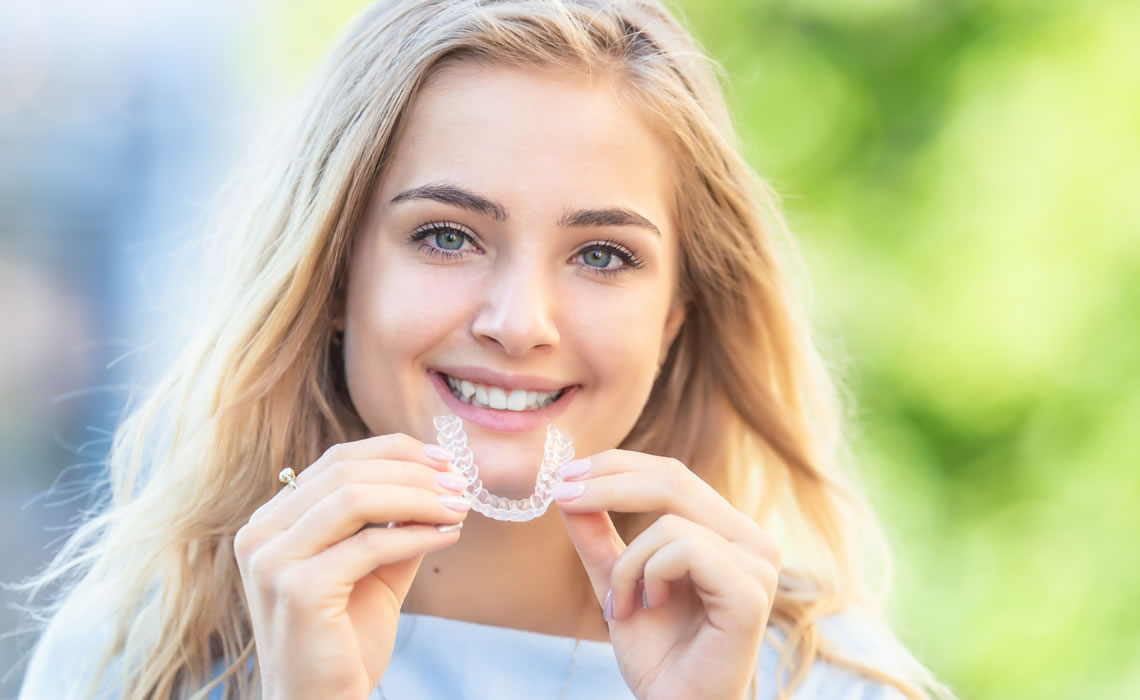
Modern orthodontics has evolved substantially with the introduction of transparent aligner technologies, offering patients an aesthetic, comfortable, and discreet alternative to fixed appliances. Among the most popular clear aligner systems globally, choosing invisalign in Turkey has become a preferred pathway for international patients seeking to resolve dental crowding, spacing, and bite irregularities without compromising everyday lifestyle. With highly trained orthodontic specialists, digital treatment simulation software, and world-class dental clinics, selecting invisalign in Turkey provides comprehensive orthodontic solutions that meet international standards of clinical excellence at affordable pricing points.
What Is Invisalign and How Do Clear Aligners Work?
Clear aligners are custom-manufactured orthodontic appliances made from medical-grade thermoplastic polymers such as SmartTrack material. Unlike conventional fixed bracket appliances, these transparent trays fit snugly over the dental arches, exerting gentle, controlled mechanical forces to shift teeth progressively into their planned positions. Each aligner is engineered to produce micro-movements of specific teeth, minimizing discomfort while maximizing movement accuracy during invisalign in Turkey treatments.
The biomechanical process relies on digital treatment planning. High-resolution intraoral scanners capture the precise geometry of the dental arch, allowing specialized software to calculate the exact force vectors required for alignment. Patients wear each set of trays for approximately one to two weeks before transitioning to the subsequent stage in the series, ensuring continuous and predictable orthodontic progression throughout invisalign in Turkey procedures.
Why Is Turkey a Preferred Global Hub for Invisalign Treatment?
Turkey has established a strong international reputation in dental and medical tourism, attracting patients from the United Kingdom, Europe, North America, and the Middle East. Orthodontic clinics in major metropolitan areas such as Istanbul, Antalya, and Izmir are equipped with the latest diagnostic technologies, including 3D intraoral optical scanners, digital cephalometric radiography, and advanced treatment monitoring platforms.
Turkish orthodontists complete five years of dental school followed by four to six years of postgraduate doctoral training in orthodontics and dentofacial orthopedics. Furthermore, clinics catering to international patients offer comprehensive service packages, including bilingual patient coordination, local airport transfers, and digital remote check-ins, allowing patients to complete their invisalign in Turkey journeys smoothly from abroad.
What Are the Main Treatment Options for Invisalign in Turkey?
Invisalign Comprehensive
Designed for complex orthodontic malocclusions, this option provides an unlimited number of aligners and refinement stages over a treatment window of up to five years. It is recommended for severe crowding, deep overbites, underbites, crossbites, and cases requiring significant arch expansion or root angulation adjustments.
Invisalign Lite
This protocol is intended for mild-to-moderate alignment issues and typically includes up to fourteen aligners along with one or two refinement sets. It is ideal for patients with moderate anterior crowding or spacing who require aesthetic alignment within a predictable timeframe of six to eight months when starting invisalign in Turkey.
Invisalign Express and i7
Express packages are designed for minor cosmetic corrections or post-orthodontic relapse, utilizing five to seven aligners. This option focuses primarily on minor adjustments to the front teeth and is completed within three to six months.
How Much Does Invisalign in Turkey Cost Compared to the UK and USA?
Cost remains a significant consideration for individuals seeking private orthodontic care. Due to favorable currency exchange rates, lower clinic overheads, and competitive operational structures in Turkey, patients can access genuine clear aligner systems through invisalign in Turkey at a fraction of Western prices without compromising on diagnostic accuracy or clinical supervision.
| Country | Mild / Express (Up to 7-10 Trays) | Comprehensive (Full Case) | Included Services |
|---|---|---|---|
| Turkey | £1,400 – £1,900 / $1,800 – $2,500 | £2,500 – £3,800 / $3,200 – $4,800 | 3D Scans, ClinCheck, Hotel & Transfers |
| United Kingdom | £2,500 – £3,500 | £4,500 – £6,500 | Treatment Only (Diagnostics Extra) |
| United States | $3,000 – $4,500 | $5,500 – $8,500 | Treatment Only (Scans Extra) |
| Germany | €2,800 – €3,800 | €4,500 – €7,000 | Treatment Only |
| Australia | AU$4,000 – AU$5,500 | AU$7,000 – AU$10,500 | Treatment Only |
As demonstrated in the comparison table, choosing invisalign in Turkey offers substantial financial savings while ensuring access to genuine Align Technology appliances and board-certified orthodontic specialists.
What Is the Step-by-Step Clinical Procedure for Clear Aligners?

The orthodontic process begins with a comprehensive consultation involving panoramic X-rays, lateral cephalometric analysis, and 3D intraoral scanning. Using ClinCheck software, the orthodontist maps out the precise tooth movements from initial position to final outcome, providing the patient with a 3D visual preview of their anticipated smile before manufacturing starts during invisalign in Turkey plans.
Once the digital plan is finalized, the custom aligners are fabricated and delivered. During the clinical fitting, small tooth-colored composite attachments are bonded onto specific teeth to provide anchorage for complex movements. Patients receive their series of trays with detailed instructions regarding wear schedules, oral hygiene routines, and remote progress monitoring.
Who Is the Ideal Candidate for Invisalign in Turkey?
- Dental Crowding: Individuals with overlapping or twisted teeth caused by insufficient space along the dental arch who opt for invisalign in Turkey.
- Diastema and Spacing: Patients with unwanted gaps between teeth looking for uniform closure without metal appliances.
- Overbite and Overjet: Cases where upper anterior teeth excessively overlap or project beyond the lower arch.
- Underbite and Crossbite: Malocclusions where lower teeth sit outside upper teeth, correctable via aligners with elastics.
- Disciplined Adult and Teen Patients: Candidates committed to wearing their aligners for the required 20 to 22 hours per day.
Invisalign vs Traditional Braces: Which Orthodontic Treatment Is Better?
When comparing clear aligners with traditional fixed appliances, treatment selection depends largely on clinical complexity and personal preference. Conventional metal or ceramic braces utilize fixed brackets and archwires to exert continuous force on the dentition, making them suitable for severe vertical discrepancies and complex root uprighting.
Conversely, clear aligners offer superior aesthetics, comfort, and oral hygiene benefits. Because the trays are removable, patients undergoing invisalign in Turkey can brush and floss normally without navigating wires and brackets, significantly reducing the risk of enamel demineralization and gingivitis during active orthodontic treatment.
How Do Lingual Brackets Compare to Invisalign in Turkey?
Patients seeking discreet orthodontic correction often compare removable aligners with customized lingual appliances. Lingual orthodontics involves attaching customized brackets to the inner, lingual surface of the teeth, rendering them completely invisible from the outside. While lingual brackets remain a fixed alternative, they may initially cause tongue irritation and temporary speech changes.
Clear aligners, by comparison, feature smooth polymer edges that cause minimal soft tissue irritation. They can also be taken out temporarily during meals and important social engagements, making invisalign in Turkey a more flexible option for busy working professionals and international travelers.
Can Complex Jaw Discrepancies Be Corrected with Aligners Alone?
While transparent aligners can resolve a wide range of dental malocclusions, severe skeletal discrepancies between the maxilla and mandible require combined treatment approaches. In cases of significant skeletal open bites, severe mandibular prognathism, or facial asymmetry, orthodontic aligners are utilized in conjunction with orthognatic surgery to achieve optimal skeletal and occlusal harmony.
In surgical orthodontic protocols, clear aligners can be used before and after corrective jaw surgery to align the dental arches relative to their respective basal bones. This multidisciplinary approach ensures both aesthetic facial balance and a functional, stable bite relationship for patients selecting invisalign in Turkey.
How Long Does Clear Aligner Therapy Take to Straighten Teeth?
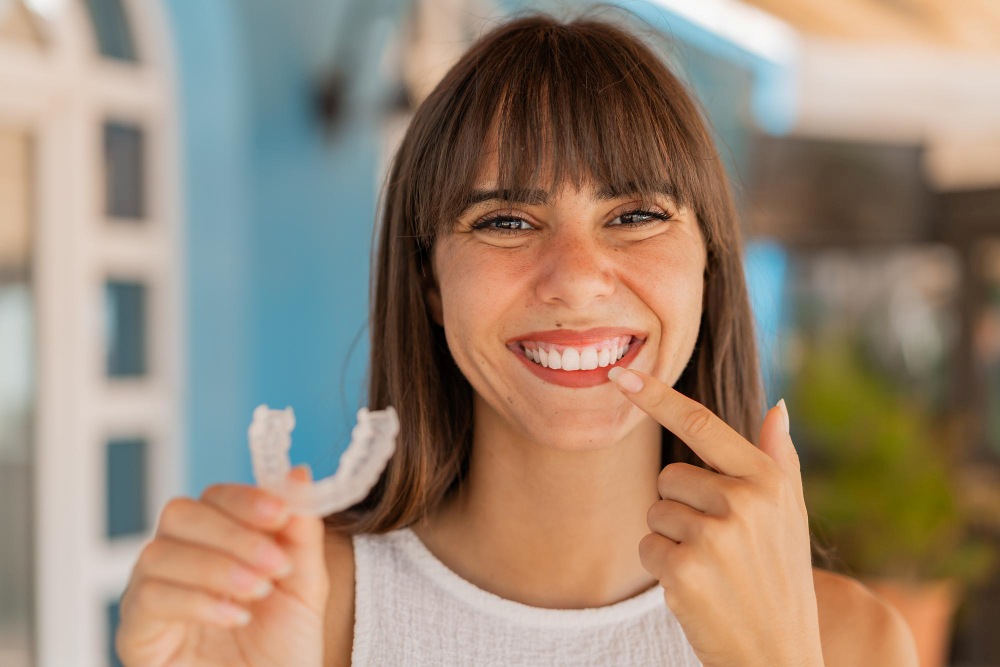
Treatment duration varies based on the biological responsiveness of alveolar bone and the degree of tooth movement required. Mild aesthetic relapses or minor anterior crowding can be resolved within 3 to 6 months using short-course protocols. Moderate cases involving rotation and arch expansion generally require 9 to 15 months of consistent wear when undertaking invisalign in Turkey.
Severe bite misalignments and complex extraction cases may take 18 to 24 months. Total treatment duration depends directly on patient compliance; failing to wear the aligners for the prescribed 20 to 22 hours daily will slow tooth movement and extend the estimated timeline.
What Are the Advantages and Potential Limitations of Clear Aligners?
Key Clinical and Lifestyle Advantages
The primary benefit of clear aligners is their near-invisible appearance, allowing individuals to undergo orthodontic treatment discreetly. Because the appliances are removed during meals, there are no dietary restrictions against hard or sticky foods, and maintaining oral hygiene remains straightforward throughout invisalign in Turkey treatment courses.
Requirement for Strict Patient Compliance
Because clear aligners are removable, treatment success relies heavily on patient discipline. Removing trays for extended periods during the day can cause tracking errors, where the teeth fail to express the programmed movements, necessitating mid-course refinements.
Biological and Masticatory Limitations
Certain severe tooth movements, such as large root torque adjustments or extrusion of rounded premolars, can be challenging with plastic aligners alone. In such cases, composite attachments, intermaxillary elastics, or auxiliary orthodontic devices are used to achieve the desired clinical result.
How Should You Care for Your Aligners and Oral Hygiene?
- Wear Trays 20 to 22 Hours Daily: Remove aligners only when eating, drinking hot or colored liquids, and performing oral hygiene routines during invisalign in Turkey plans.
- Clean Aligners Daily: Brush trays gently using a soft toothbrush and clear liquid soap or specialized cleaning crystals; avoid hot water to prevent warping.
- Brush and Floss After Every Meal: Clean teeth thoroughly before reinserting aligners to prevent trapping food particles and sugars against the enamel.
- Store Aligners in Their Protective Case: Always place trays in their designated case when eating to avoid accidental loss or physical damage.
- Avoid Staining Substances: Do not drink coffee, tea, red wine, or smoke while wearing aligners to keep the material transparent.
Is Invisalign in Turkey Suitable for Traveling International Patients?
Clear aligner therapy is exceptionally well-suited for dental tourism due to the predictable nature of digital treatment planning. International patients typically visit Turkey for an initial 2-to-4-day stay to complete 3D digital scanning, ClinCheck review, attachment bonding, and initial aligner fitting for their invisalign in Turkey journey.
The clinic can supply the patient with several months’ worth of sequential aligners to take home. Progress is monitored through dedicated digital dental monitoring applications, where patients submit high-resolution intraoral photos periodically. A second short visit is scheduled toward the end of treatment for attachment removal, final refinement evaluation, and retainer fitting.
Does Wearing Clear Aligners Cause Pain or Discomfort?
Clear aligner therapy is generally considered more comfortable than fixed metal appliances because there are no sharp brackets or archwires to cause mucosal ulcerations. When switching to a new tray in the series, patients undergoing invisalign in Turkey typically experience mild pressure or tenderness for the first 24 to 48 hours.
This transient sensation indicates that active orthodontic force is being applied to initiate cellular remodeling within the periodontal ligament. The discomfort is mild, manageable, and subsides quickly as the surrounding bone and ligament adapt to the new position.
What Is the Importance of Retainers After Completing Treatment?
The retention phase is an essential final stage of any orthodontic therapy. After active tooth movement concludes, the surrounding alveolar bone and collagen fibers require time to reorganize and stabilize around the newly positioned roots. Without proper retention, natural physiological forces and aging can cause orthodontic relapse after invisalign in Turkey.
Patients are provided with custom clear Vivera retainers or bonded fixed lingual wires to preserve their alignment. Initially, retainers are worn full-time for several months, gradually transitioning to night-time-only wear to maintain a straight, healthy smile for life.

Dr. Kıvanç Türkoğlu

Dr. Pınar Türkoğlu

Dr. Başak Topuzoğlu

Dr. Lebriz Yalçın Gürhan

Dr. Sinem Kösem Mihmar

Dr. Dt. Gürcan Çetin